


By Tru Consulting
Ask a higher ed finance leader what’s hardest about the job right now and you’ll hear some version of the same answer: the ground keeps moving. Policies shift mid-cycle. Enrollment is harder to forecast than it’s ever been. The board’s questions are getting sharper, and the models behind the answers weren’t built for this much change.
For years, planning teams in higher education institutions have treated uncertainty as a temporary disruption, something to plan around until conditions return to normal. That framing no longer holds, because normal isn’t coming back. The institutions handling it well are not the ones with better predictions. They’re the ones that have changed how they operate when the prediction turns out to be wrong.
In a recent Tru Consulting webinar, four higher education finance leaders recently compared notes on exactly that, and what emerged wasn’t a formula. It was a working philosophy built on three practices that hold up regardless of what next quarter brings.
Progress Without Perfect Information
When priorities pile up faster than they can be resolved, Mandy Cole, Associate Vice Chancellor for Budget and Finance at the University of Colorado Boulder, relies on a habit she still uses to this day. “I just tell myself, pick the next right thing,” Cole said.

"I don't worry about the 20 projects that all need to be done. I pick one thing that I know I can do, I take care of that, and then I pick the next one thing."
Mandy Cole, Associate Vice Chancellor for Budget and Finance at the University of Colorado Boulder
The habit sounds almost too simple to matter, but it offers a real alternative to the most common response to volatility, which is to wait for more clarity before acting. Clarity rarely arrives on schedule. Planning teams that wait for it fall behind the ones that keep moving with the information they have. As Cole put it, the practice “stops me from getting trapped in the overwhelm of everything that’s on my plate and instead enables me to keep moving forward.”
The Answer Isn't Always Yours to Have Alone
Masha Galchenko, Associate Vice President for Budget and Financial Analysis and University Controller at the University of South Florida, makes a related point from a different angle.
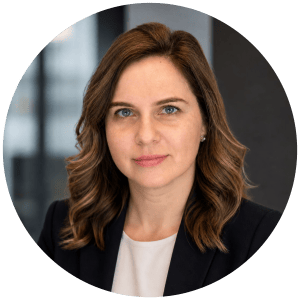
"Leadership is less about having the right answers and more about asking the right questions,”
Masha Galchenko, Associate Vice President for Budget and Financial Analysis and University Controller at the University of South Florida
Early in her career, she assumed credibility came from expertise, from personally knowing what to do. What she found instead is that institutions move forward through collaboration, with colleagues across the institution thinking through a challenge together rather than one person solving it alone.
For finance teams, that insight has a direct operational translation. A budget cycle that depends on one office producing the right numbers in isolation is fragile, while one built on continuous input from the people running academic, clinical and operational units can absorb a surprise without starting over. The forecast improves not because the model gets more sophisticated, but because more of the institution is contributing to it in real time.
Know How Your Institution Actually Works
Pim Thukral, Senior Vice President for Finance and Treasury and University Chief Financial Officer at Emory University, offers advice for anyone moving into greater responsibility: seek broader exposure, and learn how the different parts of the institution connect rather than staying focused on a single lane. It’s the same instinct she brings to communicating through volatility.

"People don't necessarily expect certainty right now, but they do expect consistency and honesty,"
Pim Thukral, Senior Vice President for Finance and Treasury and University Chief Financial Officer at Emory University
Mela Fezzey, CEO of Tru Consulting, has spent more than two decades in higher education finance and puts the same idea in concrete terms. The work of a financial analyst changes dramatically depending on where they sit, whether that’s athletics, the central budget office or an academic department, because each area runs its own funding sources, pressures and rhythms.

"Learning the business of how higher ed, or any institution that you're working for, really works can take you very, very far,"
Mela Fezzey, CEO of Tru Consulting
A leader who understands how those distinct worlds fit together can see problems coming before they arrive. One who treats them as separate silos ends up planning for an institution that exists only on paper.
This is the quiet argument for connected planning, made without ever using the phrase. A budgeting process scattered across disconnected departmental spreadsheets can’t reflect how the institution operates, because it was never built to see the whole picture. The teams that plan well under uncertainty are usually the ones that connected their data across those boundaries long before the volatility hits.
What This Means for the Next Planning Cycle
None of this requires a perfect system or a stable environment that isn’t coming back. It requires a planning process built to expect volatility rather than treat it as an interruption:
- Scenario models updated as conditions change, not once a year
- Budget conversations that pull in departmental leaders early, not after the numbers are already set
- A forecast that reflects what’s actually happening across the institution, not just what one office can see from its own desk
Each of these institutions is living this in real time. Emory is preparing to launch a new ERP system, the platform that will run its accounting, payroll, and financial reporting going forward. USF is navigating its own ERP changeover while also transferring an entire campus’s facilities operations to another state university, a shift Galchenko has to manage without disrupting student services or leaving employees uncertain about where they stand. And at CU Boulder, Cole’s team is leading a financial stewardship initiative on the heels of implementing both a new budget model and a new forecasting and planning tool.
What all three have in common is that the planning can’t pause while the systems change. Budgets still must close, forecasts still have to hold up and leadership still needs numbers it can trust, even in the middle of a major transition. This is the work Tru does with institutions every day: keeping planning, forecasting and reporting steady through moments exactly like these, whether the disruption is a new ERP, a new budget model or a mandate nobody saw coming.
Tru Consulting® Services
Three Core Solution Areas
We help institutions solve today’s challenges and build a smarter, stronger future.

Enterprise Performance Management
Plan With Confidence
Improve planning, forecasting, and financial performance.
- Budgeting & Forecasting
- Financial Planning
- Reporting & Analytics
- Scenario Modeling
- Performance Management

Enterprise Resource Planning
Run More Effectively
Modernize systems and processes to drive efficiency.
- ERP Readiness Assessment
- ERP Strategy & Selection
- Process Optimization
- Chart of Accounts Redesign
- Implementation Support

Data & Artificial Intelligence
Make Smarter Decisions
Turn your data into insights and a competitive advantage.
- Data Strategy
- Analytics & Dashboards
- AI Enablement
- Data Governance
- Intelligent Insights
Cole, Galchenko, Thukral and Fezzey shared these ideas in a recent conversation hosted by Tru Consulting, part of an ongoing series on leadership in higher education. The specifics differed by institution, but the underlying practice didn’t: move forward with the information available, build the relationships that make better information possible, and understand the institution well enough to know where the next question is coming from.
Where in your own planning cycle are you still waiting for certainty that isn’t going to arrive? That’s usually the place worth looking at first.
About Tru Consulting
Tru Consulting is a strategic planning modernization partner focused exclusively on higher education, academic medical centers, and public sector organizations. Our team helps institutions build connected planning environments that improve visibility, reduce manual effort, and support better decisions. This post is adapted from a Tru workshop session led by Cole, Galchenko, Thukral and Fezzey
You can watch the webinar on demand below:
